Time slips quietly when you walk through Kampong Gelam. A mural catches your eye. A call to prayer drifts across the street. Coffee turns into conversation. Suddenly the afternoon feels shorter than planned. That is why timing matters here. Not rigid scheduling. Gentle structure. Enough clarity to enjoy the streets without checking your watch every five minutes.
Most visitors do not struggle with distance. They struggle with flow. They leave later than expected. They linger longer than planned. Then dinner reservations feel rushed. The goal of a good walking itinerary is not speed. It is a rhythm. You want your route to breathe while still landing you where you need to be, exactly when you need to be there.
This guide shows how to build a two to four hour walking route that works with real time. Not ideal time. Real afternoons. If you leave at 2:15 pm, what time do you arrive? If dinner is booked at seven, how much room do you truly have? Simple time math answers these questions without stress. A reliable time from now calculator turns guesses into calm decisions. It belongs in your pocket before you take your first step.
Quick walking summary
Plan your route around real departure time. Break the walk into human sized segments. Leave space for pauses. Keep one clear end point. When time is visible, Kampong Gelam opens up instead of closing in.
Start with your real departure time
Many itineraries fail before they begin. The reason is simple. They assume a round hour start. You rarely leave at two o clock. You leave at 2:15. Or 2:27. Or after one last photo. Begin there. Write down the exact minute you step onto the street. That moment anchors everything that follows.
From that anchor, every segment becomes easier to judge. A ten minute stroll stays ten minutes. A twenty minute visit stays honest. When you know the true starting point, the rest of the walk stops drifting. You are no longer chasing an imaginary schedule.
In Kampong Gelam, this matters because streets invite lingering. You will pause. Accept it. Plan for it. Timing works best when it allows curiosity rather than fighting it.
Break the walk into human segments
Two to four hours sounds long on paper. On foot, it moves quickly. The trick is not to think in hours. Think in segments. Streets. Stops. Small rewards. Each piece should feel complete on its own.
A useful rhythm is twenty to thirty minutes of walking followed by a stop. That stop can be visual. Cultural. Or delicious. This pacing keeps energy steady and attention sharp. It also makes it easier to adjust without stress.
- Arrival and orientation. Ten minutes to settle in, check direction, and get comfortable.
- First walking stretch. Twenty minutes through nearby streets and lanes.
- Cultural pause. Twenty to thirty minutes inside or around a key landmark.
- Food or rest stop. Thirty minutes seated or strolling slowly.
- Final loop. Thirty to forty minutes to wrap the walk with intention.
Let landmarks guide your clock
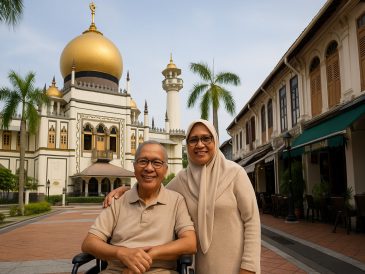
Landmarks are natural timekeepers. They help your brain estimate duration without effort. Kampong Gelam has several that work beautifully for this purpose. One of the strongest anchors is the area around Sultan Mosque heritage. Visitors tend to spend longer here than expected. The space invites reflection. Plan for that.
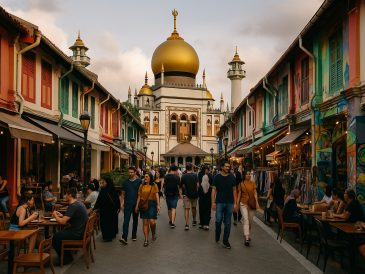
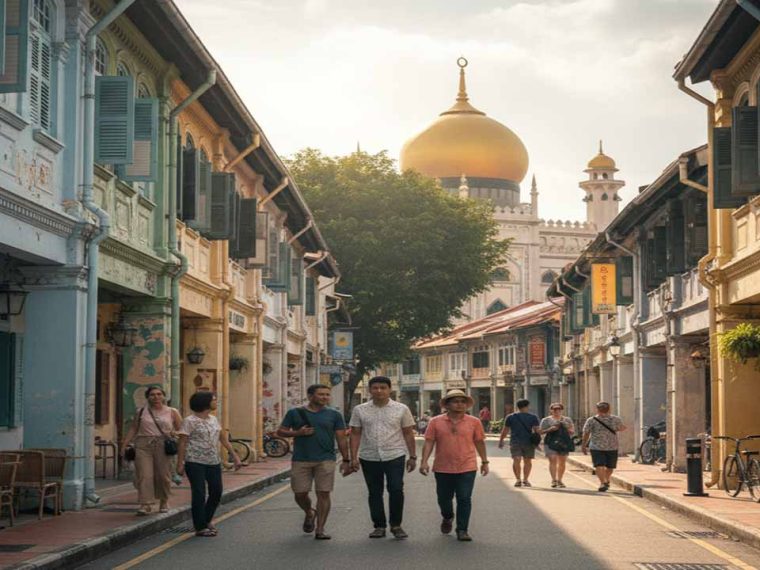
Another useful marker is the transition from heritage streets to retail lanes. The shift in pace signals time passing. When you enter Haji Lane shopping street, walking slows. Browsing begins. That is not lost time. It is a different tempo. Build it into the route instead of pretending it will not happen.
Food stops serve as the clearest time boundary of all. Once seated, minutes become tangible again. If you plan a mid walk pause near local hawker delights, you regain a sense of clock time without pressure.
Build buffer without calling it buffer
The word buffer sounds technical. The feeling should not. Think of a buffer as kindness toward your future self. Five minutes here. Ten minutes there. Space for a surprise shop or an unexpected conversation.
In walking itineraries, buffer hides best inside transitions. The walk between streets. The moment after finishing a drink. The pause before deciding where to head next. These moments absorb delay without stealing joy.
If your route ends with a fixed dinner reservation, reverse plan gently. Count backward from that time. Subtract walking time. Subtract one long pause. What remains is your flexible middle. That is where Kampong Gelam shines.
A simple timing table you can glance at
| Segment | Typical duration | Notes |
|---|---|---|
| Orientation walk | 10 to 15 minutes | Helps set pace early |
| Heritage stop | 20 to 30 minutes | Often runs longer |
| Street wandering | 25 to 40 minutes | Flexible and forgiving |
| Food pause | 30 minutes | Resets energy |
Adjust in motion without stress
Even the best planned walk changes once it begins. The key is knowing when to shorten and when to stay. Use time as feedback, not as a judge. If you are behind, shorten the next segment. If you are ahead, slow the pace and enjoy it.
This is where quick time checks help. A simple glance tells you whether you have twenty minutes or forty before the next commitment. Decisions become lighter. You stop bargaining with yourself.
Walking itineraries succeed when they forgive adjustment. Kampong Gelam rewards that mindset.
Ending the walk with intention
The final thirty minutes matter more than the first. That is when tired legs meet anticipation for the evening. Choose an ending that supports the rest of your day. Somewhere seated. Somewhere calm. Somewhere close to where you need to be next.
If dinner follows, arrive early rather than rushing. If rest follows, let the walk taper naturally. Ending well makes the whole route feel right, even if the middle shifted.
For visitors wanting deeper historical context around the district, background reading from Kampong Glam history can add meaning to what you see on foot. Knowledge changes how time feels.
Where your time finally lands
A walking route that fits your day does not dominate it. It supports it. Time becomes a quiet companion instead of a pressure point. You leave when you leave. You arrive when you arrive. Everything in between feels earned.
In Kampong Gelam, this approach lets streets speak for themselves. You notice details. You pause without guilt. You still make dinner. That balance is the real success of itinerary timing.